How many days are needed to visit the Riviera Maya?
Seven days allow you to discover several major sites without covering everything. Ten days offer more flexibility and make it possible to add an island or an overnight stop, such as Bacalar or Holbox.
What is the best time to go?
December to March is often drier and less exposed to sargassum, but also busier and more expensive. November and April often represent an interesting compromise; check local forecasts for the beaches.
Is it necessary to rent a car in the Riviera Maya?
No, not necessarily. Buses and colectivos serve the main towns. A car becomes practical to link multiple cenotes or explore remote areas, provided you carefully check the insurance and fees.
Do sargassum seaweeds prevent enjoying the stay?
Not necessarily. Their presence varies according to the beaches and the days. Plan alternatives such as cenotes, cultural visits, or an excursion to an island, then check the coastal condition before moving around.
What travel tips should be applied in cenotes?
Follow swimming instructions, take a shower before entering, use authorized sunscreens, and avoid touching rock formations. For cave diving, specific certification and suitable supervision are essential.
The Riviera Maya stretches approximately 130 kilometers of Caribbean coast in the Mexican state of Quintana Roo, between Puerto Morelos and the Sian Ka’an reserve. This corridor brings together beaches, reefs, freshwater cenotes and Mayan ruins, but also lively towns like Playa del Carmen and Tulum. In 2026, the challenge is not to visit everything: it is to choose a coherent pace and stops, without spending your vacation in transit or exceeding your holiday budget.
For a first trip to Mexico in 2026, ideally plan seven to ten days on site. The ideal season depends on your priorities: winter generally brings drier weather and less sargassum, while less busy months can reduce accommodation costs. The most important travel advice is simple: book popular activities, bring pesos, protect your skin, and check entry requirements before departure. The rest is shaped according to your desires for culture, swimming, or adventure.
In brief: preparing your stay on the Riviera Maya in 2026
- Where to go: Playa del Carmen is a practical base camp, Tulum suits travelers attracted to ruins and nature, and Puerto Morelos offers a quieter atmosphere.
- How long: one week allows you to discover some major sites; ten days give time to add an island or a more distant stopover.
- When to go: December to March often corresponds to the driest season, but prices and crowds are higher then.
- How to get around: ADO buses and colectivos connect the main towns; a car makes detours to cenotes and isolated areas easier.
- To watch for: sargassum varies from one beach to another, prices fluctuate, and site access rules can change.
Riviera Maya in 2026: understanding the region and choosing your base camp
The Riviera Maya is not a city, but a portion of the Quintana Roo coastline, in the southeast of the Yucatán peninsula. Cancún is located to the north and mainly serves as an air gateway; Puerto Morelos marks the beginning of the tourist area, while Tulum and the outskirts of Sian Ka’an are further south. Playa del Carmen, in the center, allows you to radiate towards Cozumel, the cenotes, and Mayan archaeological sites.
The choice of accommodation significantly shapes the trip. In Playa del Carmen, you find restaurants, shops, and regular departures to the islands, but some neighborhoods are noisy at night. Tulum offers convenient access to the ruins, Muyil, and southern beaches, while presenting significant distances between the center, the hotel zone, and the coastline.
Puerto Morelos suits those looking for a quieter stopover and snorkeling outings. For a family, accommodation with a kitchen and pool may be more comfortable than a hotel in the heart of the action; for a short stay, sleeping near transport reduces transfers. Always compare the displayed price to the total cost: taxes, service fees, daily trips, and meals can significantly change the bill.
The geography also forces you to give up some excursions when time is lacking. Bacalar is several hours by road south of Tulum, while Chichén Itzá requires a long day from Playa del Carmen. It’s better to plan an overnight stay for these distant destinations rather than squeezing them into an already full program.
The best base is the one that matches planned activities, not necessarily the one that seems most famous. Once this base is chosen, it becomes easier to select visits without multiplying back and forth trips.
What to see on the Riviera Maya: beaches, islands and must-see sites
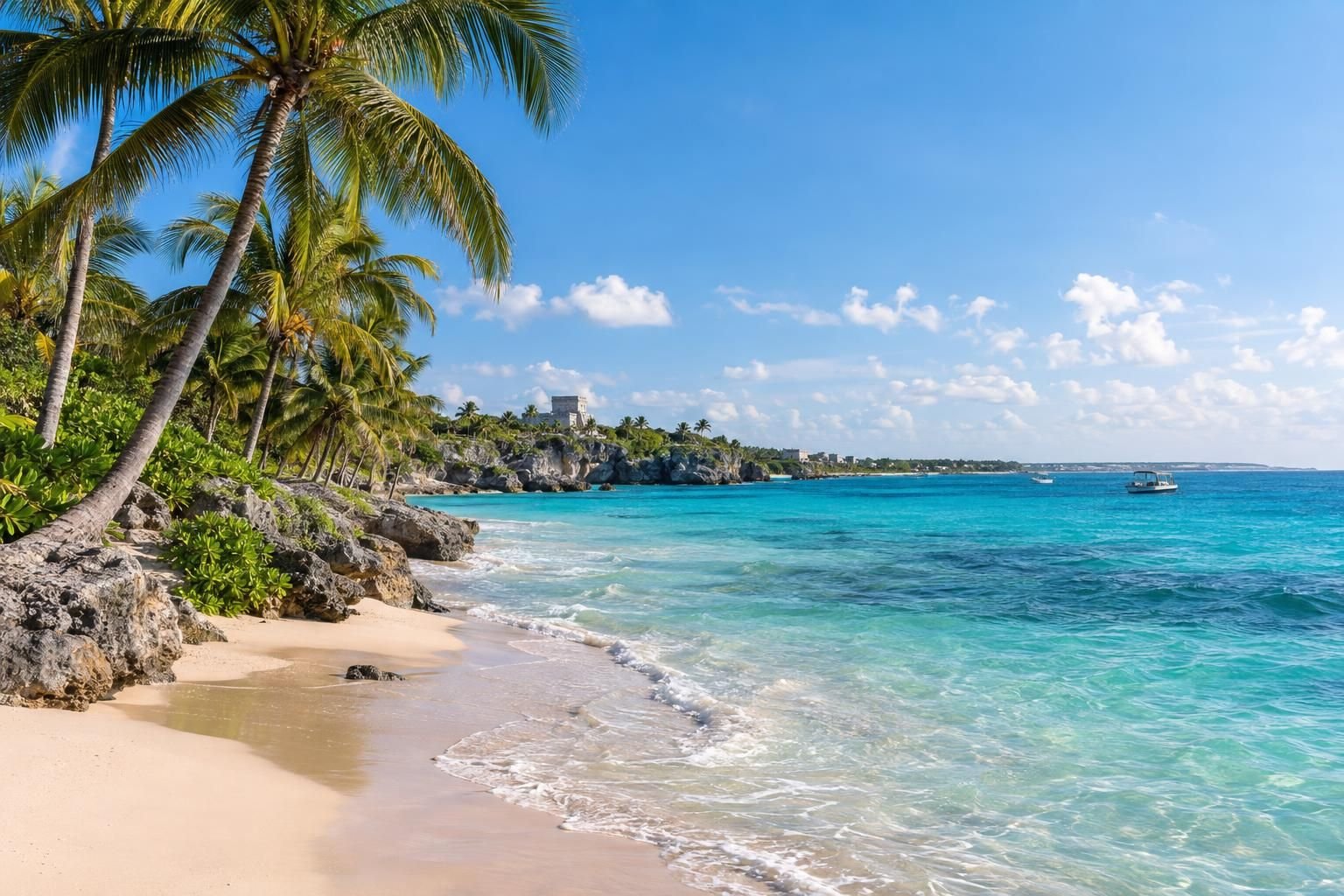
The ruins of Tulum attract by their spectacular location above the sea. The route is relatively short, often one to two hours, but the sun is intense and shade limited. Arriving early allows enjoying cooler temperatures and reduces wait times; access, fees, and open beaches can vary, so check the official information shortly before visiting.
Cobá offers a different experience: the remains are located in a forest where you move on foot, by bike, or sometimes by tricycle. The Nohoch Mul pyramid impresses by its size, but climbing it is prohibited; the visit remains interesting to understand the extent of the ancient city and observe the vegetation. Muyil, near Sian Ka’an, is quieter and can be combined with a discovery of the canals, depending on local conditions and organization.
For an island day, Cozumel is particularly appreciated by divers and snorkeling enthusiasts. The ferry departs from Playa del Carmen; on the island, beaches and underwater sites are dispersed, so you need to plan a means of transport or book a guided outing. Isla Mujeres is reached from Cancún and is more suitable for a day of swimming, biking, or discovering Playa Norte.
Puerto Morelos is another option to explore the reef, with boat trips organized by local operators. In Akumal, turtle watching is done under rules intended to limit animal disturbance: find out about accessible zones and current accompaniment conditions. The Xcaret and Xel-Há parks offer structured days; the first mixes nature and shows, the second favors aquatic activities.
On Playa del Carmen’s Quinta Avenida, shops and restaurants are numerous, but parallel streets and areas further from the tourist front sometimes offer more affordable addresses. Choose a cultural visit, a sea outing, and a freer day: this trio offers a varied glimpse without turning the stay into a race.
Mayan archaeological sites and cenotes: organizing respectful visits
Mayan archaeological sites tell a story that goes beyond visible monuments. Tulum was an important port on the coast, Cobá extended in the middle of lakes and forests, and Muyil was located on trade routes linked to the lagoons. A qualified guide helps place the buildings in their context and distinguish historical facts from sometimes simplified stories offered to visitors.
From the Riviera Maya, Chichén Itzá is a demanding excursion: you must allow several hours of driving each way, plus the site visit. Starting early limits heat exposure and allows better enjoyment of the place. An overnight stay in Valladolid can make the itinerary more pleasant, especially if you also want to discover the city or a cenote inside the Yucatán.
Cenotes are natural cavities in limestone giving access to underground waters. Some are open to the sky and bathed in light; others are semi-open or entirely underground, with remarkable rock formations. Chac Mool and Tajma Ha are particularly well known to divers, but cave diving requires appropriate training and is not suitable for casual tourist discovery.
For family swimming, prefer a developed site, check the depth, and respect staff instructions. Showering before entry is often mandatory and standard sunscreens may be banned to protect the water and living organisms. Bring a towel, shoes that grip on rocks, and cash: not all small sites accept card payments.
In the ruins as in the cenotes, do not climb on structures, do not touch concretions, and do not leave any waste. Drone and photography rules differ depending on sites; ask permission rather than assume a device is allowed. A successful visit leaves the places as preserved as you found them.
Beaches and cenotes: climate, sargassum and ideal season
The climate is tropical: heat and humidity dominate all year, with generally cooler days from December to February and more frequent rain episodes during the wet season. The months from May to August can be particularly hot. Even in the dry season, a shower or wind remains possible; bring light clothing, a compact raincoat, and water for outings.
Sargassum arrives variably, depending on currents and weather conditions. It can accumulate on some beaches while other areas stay cleaner the same day. The phenomenon is often more reported in spring and summer, but no seasonal forecast guarantees the state of a beach on a specific date.
To limit the risk of disappointment, check local information just before booking a beach day and have an alternative. Cenotes are not affected by these strandings; islands or beaches facing north and west can sometimes be less affected, without this being a certainty. If sea swimming is compromised, an outing to Cozumel, a cenote visit, or a cultural day allows you to adapt the program.
The ideal season therefore depends on the desired compromise. From December to March, conditions are often pleasant and sargassum arrivals more limited, but accommodations are sought-after and prices rise. November and April can offer a good balance between weather, attendance, and cost. The low season attracts with more affordable prices, but you must accept wetter weather and monitor alerts related to tropical storms.
Bring sunscreen adapted to natural area rules, a hat, and a water bottle. For water activities, choose operators who respect safety instructions and protected zones. Flexibility in the schedule is often better than an unchangeable booking based on assumed weather.
Local transport: buses, colectivos, car and excursions
Local transport allows you to travel without renting a car if the itinerary follows the main towns. ADO buses notably connect Cancún airport, Playa del Carmen, and Tulum; they are comfortable for long distances but do not always drop off near a cenote or secluded beach. Colectivos, shared minibusses, run along the coastal axis and are practical for short trips, provided you travel light and confirm the stop point.
A car offers more freedom to visit multiple cenotes in the same day or head to Bacalar. Before booking, compare prices with insurance included and read contract conditions carefully. At the counter, ask for the total amount, deductibles, deposit, and coverage terms; photograph the vehicle’s condition and fuel level when picking it up.
The Tren Maya serves several destinations in the peninsula, but station locations and connections can make the journey less direct than it appears on a map. Check schedules, available transfers, and time needed to reach your accommodation. For an excursion to a distant site, organized transport may be simpler than an improvised combination of buses and taxis.
Taxis are useful for a single trip, but ask the price before getting in or prefer a clearly booked ride. At the airport, prepaid transfers avoid negotiating upon arrival, especially with children or lots of luggage. Main roads are busy; avoid driving tired or planning long trips after a day in the sun.
The best choice depends on your program: buses and colectivos for a stay centered on the coastal axis, car to explore at your own pace, transfers to save time on some excursions. Assess real distances before adding stops: kilometers may seem short, but traffic and connections count.
Holiday budget on the Riviera Maya: expenses and useful tips
The holiday budget varies greatly depending on the season, accommodation level, and number of paid activities. A simple day, with budget lodging, local meals, and bus travel, costs significantly less than a day at a theme park or private excursion. Tickets for major parks, diving outings, and individual transfers often represent the heaviest expenses; allow a margin rather than calculating meals and hotel alone.
| Item | Economy option | Comfort option | To anticipate |
|---|---|---|---|
| Accommodation | Hostel or simple room | Hotel or apartment | Taxes and location |
| Meals | Markets and taquerias | Various restaurants | Tips according to service |
| Transport | ADO and colectivos | Rental or transfers | Insurance, fuel, luggage |
| Activities | Beaches and some cenotes | Parks and guided tours | Entry fees, equipment, booking |
To eat at reasonable prices, look for places frequented by locals and markets while checking food preservation conditions. Tacos, soups, and daily specials allow discovering local cuisine without systematically dining in the most touristy areas. In Playa del Carmen, prices can vary from one street to another, even just minutes from the Quinta Avenida.
The Mexican peso is generally the most advantageous currency for everyday expenses. US dollars are sometimes accepted, but the exchange rate applied by a shop can be unfavorable. Withdraw from an ATM located in a bank or busy place, refuse conversion proposed by the terminal if less favorable, and check your card’s fees – these are good habits.
The low season can reduce room prices, but last-minute offers are not guaranteed and popular activities may be fully booked. Compare the cost of an organized excursion to independent transport including entries and meals. The most realistic budget is one that includes transport, extra fees, and a rest day, not just big tickets.
Entry formalities, tourist safety and realistic itineraries
Before leaving, check entry formalities with Mexican authorities and official advice from your country: requirements depend on nationality, duration, and purpose of stay. French, Belgian, Swiss, and Canadian tourists generally do not need a visa for a short tourist visit, but a valid passport and travel documents may be requested. Keep a digital copy of your documents and confirm rules a few weeks before departure.
Tourist safety mainly involves common sense: keep your valuables discreet, use safes when available, and avoid deserted areas late at night. Favor identifiable transport, communicate your itinerary to someone close, and keep a backup payment method separate. On the road, respect speed limits, avoid driving at night on unknown routes, and never leave visible bags in a car.
For seven days, a balanced program can combine a morning in Tulum, a day dedicated to Cozumel or Isla Mujeres, a visit to Cobá or Muyil, two swims in cenotes, and free time in Playa del Carmen. Chichén Itzá can replace an activity but should not be combined with Tulum on the same day. With ten days, add a night in Bacalar or Holbox rather than attempting a same-day round trip.
Families will benefit from alternating sun visits with shade breaks and water activities. A child does not need to chain ruins to appreciate history: a guide telling daily life, a short walk, and a swim can make a more memorable day. Travelers as couples or friends can devote more time to diving, evenings, or a private excursion, depending on their priorities.
Plan travel insurance covering care and planned activities, especially diving or water sports. Drink regularly, respect lifeguards’ instructions, and do not swim if sea conditions are unfavorable. A safe and pleasant itinerary allows time for the unexpected as much as for planned visits.
Practical questions for a trip to Mexico 2026
How many days are needed to visit the Riviera Maya?
Seven days allow you to discover several major sites without covering everything. Ten days offer more flexibility and make it possible to add an island or an overnight stop, such as Bacalar or Holbox.
What is the best time to go?
December to March is often drier and less exposed to sargassum, but also busier and more expensive. November and April often represent an interesting compromise; check local forecasts for the beaches.
Is it necessary to rent a car in the Riviera Maya?
No, not necessarily. Buses and colectivos serve the main towns. A car becomes practical to link multiple cenotes or explore remote areas, provided you carefully check the insurance and fees.
Do sargassum seaweeds prevent enjoying the stay?
Not necessarily. Their presence varies according to the beaches and the days. Plan alternatives such as cenotes, cultural visits, or an excursion to an island, then check the coastal condition before moving around.
What travel tips should be applied in cenotes?
Follow swimming instructions, take a shower before entering, use authorized sunscreens, and avoid touching rock formations. For cave diving, specific certification and suitable supervision are essential.